Here's why:
* Protists are defined by their simplicity. They are eukaryotic organisms that are generally single-celled (unicellular).
* Multicellularity implies specialization. In multicellular organisms, different cells have specialized functions, working together as tissues and organs. Protists, on the other hand, lack this complex organization.
However, there are some protists that exhibit multicellular-like characteristics:
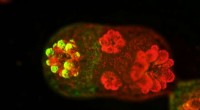
* Colonial protists: These are groups of individual protists that live together in a coordinated fashion. For example, Volvox, a green alga, forms spherical colonies of hundreds or thousands of cells. These cells show some division of labor, but they are not truly specialized like cells in a multicellular organism.
* Slime molds: These protists can exist as single-celled amoebas, but under certain conditions, they can aggregate into a large, mobile mass called a plasmodium. This plasmodium can be quite large and exhibits coordinated movement, but it is not a true multicellular organism because it lacks the complex organization of cells.
In summary: While there are protists that exhibit some multicellular-like characteristics, they are not considered truly multicellular.