Here's a breakdown:
* Food enters the stomach after being chewed and swallowed in the mouth.
* The stomach's muscular walls churn and mix the food with gastric juices, which contain:
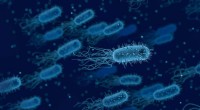
* Hydrochloric acid (HCl): This strong acid breaks down food particles and kills bacteria.
* Enzymes: These biological catalysts speed up chemical reactions, breaking down proteins and other molecules.
* The churning and mixing process creates a thick, soupy mixture called chyme.
* Chyme is then gradually released from the stomach into the small intestine for further digestion and absorption.