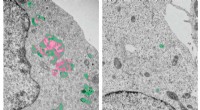
* Lack of a nucleus: Both red blood cells and many unicellular organisms lack a nucleus. This is a unique feature that sets them apart from most other body cells. The absence of a nucleus allows for more space for the molecule responsible for oxygen transport, hemoglobin.
* Simple structure: Both red blood cells and unicellular organisms have a relatively simple structure. They lack many of the complex organelles found in other cells.
* Biconcave shape: Red blood cells have a biconcave shape, similar to some unicellular organisms like amoebas. This shape increases their surface area for oxygen absorption.
While red blood cells are not truly unicellular organisms, their simple structure and lack of a nucleus make them an example of a body cell with similarities to the structure of single-celled life forms.
Other cells that share some similarities with unicellular organisms:
* Platelets: These small, irregular-shaped cells lack a nucleus and are involved in blood clotting.
* Muscle cells: Some muscle cells, like smooth muscle cells, have a more elongated and simpler structure compared to other cells in the body.
It's important to remember that these are analogies. While these body cells may share certain structural similarities, they are still specialized cells within a multicellular organism and perform complex functions that are not found in independent unicellular organisms.