The Town Analogy
* Cell = Town: Imagine a town with a growing population. As the population increases, the town needs more resources to support its residents. The town also needs more space for its citizens to live and work.
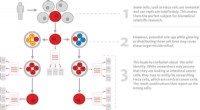
* Cell Division = Town Expansion: To accommodate the growing population, the town needs to expand. This expansion can happen in several ways:
* Building new houses: This is like cell growth – the cell gets bigger to house more organelles and materials.
* Building a new town: This is like cell division – the cell splits into two new cells, each capable of supporting its own population of organelles and materials.
* Resources = Cell Components: The town needs resources like food, water, and energy to function. These are analogous to the organelles and materials inside a cell.
* Town Hall = Nucleus: The town hall serves as the central control center, managing the town's affairs. This is similar to the nucleus of a cell, which contains the DNA and directs all cell activities.
Why Cells Divide
* Resource Limits: Just like a town, a cell can only hold a certain amount of resources. As the cell grows, it needs more resources to function properly.
* Surface Area to Volume Ratio: As a cell grows, its volume increases faster than its surface area. This means the cell has less surface area available to transport the resources it needs.
* Efficient Functioning: Cell division ensures that each new cell has enough surface area to efficiently absorb nutrients and remove waste products. It also ensures that each cell has a manageable amount of DNA and other cell components.
* Growth and Repair: Cell division is essential for growth and repair. New cells are needed to replace damaged or old cells.
In Conclusion:
The town analogy helps us understand that cell division is a necessary process for cells to maintain their ability to function properly. Just like a growing town needs to expand to accommodate its population, cells need to divide to ensure they have enough resources, efficient transport, and the appropriate amount of genetic material.