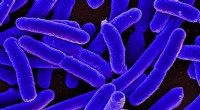
1. Bacteria: These are single-celled organisms that lack a nucleus and other membrane-bound organelles. They are prokaryotes and have diverse metabolisms, enabling them to live in a wide range of environments. Examples include E. coli, Lactobacillus, and Salmonella.
2. Archaea: Similar in size and shape to bacteria, archaea are also single-celled prokaryotes. However, they have distinct biochemical pathways and genetic makeup, allowing them to thrive in extreme environments like hot springs, salt lakes, and deep-sea vents.
3. Eukarya: This group includes all organisms with a nucleus and other membrane-bound organelles. While many are multicellular (plants, animals, fungi), microorganisms within this category include:
* Protists: This diverse group includes single-celled organisms like algae, amoeba, and paramecium.
* Fungi: These can be single-celled (yeasts) or multicellular (molds and mushrooms).
Remember, this is a simplified classification. There are many other types of microorganisms, including viruses, which are not considered living organisms because they require a host cell to reproduce.