Similarities:
* Result: Both processes result in the creation of two daughter cells from a single parent cell.
* Genetic material: Both processes involve the replication of the genetic material (DNA) before cell division.
Differences:
1. Complexity of genetic material:
* Binary fission: Prokaryotes have a single, circular chromosome that is attached to the cell membrane. The DNA replicates, and the two copies move to opposite ends of the cell.
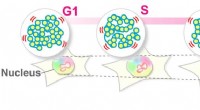
* Mitosis/cytokinesis: Eukaryotic cells have multiple linear chromosomes housed within a nucleus. The DNA replicates, and the chromosomes condense and align along the spindle fibers before being pulled to opposite poles of the cell.
2. Cell structures involved:
* Binary fission: Prokaryotes lack a nucleus, spindle fibers, and other complex organelles. They have a single, circular chromosome that is attached to the cell membrane.
* Mitosis/cytokinesis: Eukaryotes have a nucleus, spindle fibers, and other organelles. The process of mitosis involves the breakdown and reformation of the nuclear envelope, and the movement of chromosomes along the spindle fibers.
3. Cytokinesis:
* Binary fission: The cell wall grows inward, eventually pinching the cell in two.
* Mitosis/cytokinesis: The process of cytokinesis differs in plant and animal cells. In animal cells, a cleavage furrow forms and pinches the cell in two. In plant cells, a cell plate forms across the middle of the cell, eventually becoming a new cell wall.
4. Duration:
* Binary fission: Binary fission is generally a faster process than mitosis.
* Mitosis/cytokinesis: Mitosis is a more complex process that takes longer than binary fission.
In summary:
Binary fission is a simpler process of cell division that occurs in prokaryotes. Mitosis/cytokinesis is a more complex process that occurs in eukaryotic cells and involves the intricate movement and separation of multiple chromosomes.