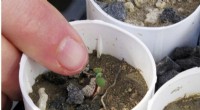
Seed germination is the process by which a seed, under favorable conditions, emerges from its dormant state and begins to grow into a seedling. It's a fascinating and crucial step in the life cycle of plants, allowing for the continuation of plant species.
Here's a breakdown of the process:
1. Water Absorption: The seed first needs to absorb water. This softens the seed coat, allowing for the embryo inside to receive the necessary moisture for growth.
2. Metabolic Activation: As the seed absorbs water, its metabolic processes kick into gear. Enzymes start breaking down stored food reserves, providing energy for the developing embryo.
3. Root Emergence: The first visible sign of germination is the emergence of the radicle, the embryonic root. It grows downward, anchoring the seedling and absorbing water and nutrients.
4. Shoot Emergence: Next, the plumule, the embryonic shoot, emerges from the seed. It grows upward towards the light, eventually developing leaves for photosynthesis.
5. Seedling Growth: The seedling continues to grow, utilizing energy from the stored food reserves until it can produce its own food through photosynthesis.
Factors Affecting Germination:
* Water: Crucial for seed swelling and metabolic activity.
* Temperature: Each plant species has an optimal temperature range for germination.
* Oxygen: Needed for respiration by the developing embryo.
* Light: Some seeds require light for germination, while others need darkness.
* Seed Viability: Seeds lose viability over time. The age and storage conditions of the seed affect its ability to germinate.
Importance of Seed Germination:
* Plant Reproduction: Germination is essential for the perpetuation of plant species.
* Food Production: Germination is the starting point for the production of all our fruits, vegetables, and grains.
* Ecological Importance: Plants play a vital role in the ecosystem, and germination is the first step in their contribution to the environment.
Understanding seed germination is important for gardeners, farmers, and anyone interested in the natural world. It's a fascinating process that allows life to flourish and sustain the planet!