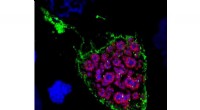
Here's why:
* Epithelial tissue is one of the four basic tissue types in the body. It's characterized by closely packed cells with minimal intercellular space.
* Epithelial cells are responsible for lining surfaces, forming barriers, and facilitating the movement of substances across those surfaces.
* Hollow body organs like the stomach, intestines, bladder, and blood vessels all require a lining to protect the underlying tissues and regulate the passage of substances.
There are many different types of epithelial cells, each with a specific function:
* Simple squamous epithelium is thin and flat, ideal for diffusion in the lungs and blood vessels.
* Stratified squamous epithelium provides protection in areas of high abrasion, like the skin and mouth.
* Cuboidal epithelium is found in glands and ducts for secretion and absorption.
* Columnar epithelium with its elongated shape aids in absorption and secretion in the digestive system.
So, whenever you encounter a question about cells lining hollow organs, think "epithelial cells"!