* Seeing the Unseen: Before the microscope, scientists could only observe organisms and structures with the naked eye. This limited their understanding of the fundamental building blocks of life. The microscope allowed them to see into the microscopic world, revealing a level of organization previously unknown.
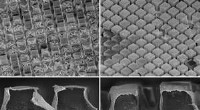
* Observing Cells: Robert Hooke, in 1665, used an early compound microscope to examine a thin slice of cork. He observed tiny, box-like compartments, which he named "cells" because they reminded him of the cells in a monastery. This was the first time anyone had described cells.
* Further Discoveries: Later scientists, like Antonie van Leeuwenhoek, used improved microscopes to observe living cells like bacteria, protozoa, and red blood cells. These observations built upon Hooke's work, showing the diversity of cellular life.
* Forming the Theory: The consistent observation of cells across various living organisms led scientists to realize that all living things were made up of these basic units. This led to the formulation of cell theory, which states:
* All living organisms are composed of one or more cells.
* The cell is the basic unit of structure and function in living organisms.
* All cells arise from pre-existing cells.
In summary: The invention of the microscope enabled scientists to see cells for the first time, paving the way for the discovery of their importance in the structure and function of all living things, and ultimately leading to the development of cell theory.