Genes:
* The blueprint of life: Genes are segments of DNA that contain the instructions for building and maintaining an organism. They dictate traits like eye color, height, and susceptibility to certain diseases.
* Variations: Genes can mutate, creating variations within a population. These mutations are random and can be beneficial, harmful, or neutral.
* Heritability: Mutations can be passed down to offspring, creating a foundation for evolutionary change.
Environment:
* Selective pressure: The environment exerts pressure on organisms, favoring traits that improve survival and reproduction. This pressure can be driven by factors like climate, food availability, predators, and competition.
* Adaptation: Over time, the environment selects for individuals with advantageous mutations, leading to the accumulation of beneficial traits within a population. This process is known as adaptation.
* Evolutionary change: As adaptations become more common, the population evolves, changing its overall genetic makeup and physical characteristics.
How They Interplay:
* Genes provide the raw material for evolution: Variations in genes create the potential for change.
* Environment acts as the filter: It determines which variations are beneficial, leading to the survival and reproduction of individuals with those traits.
* The cycle continues: As the environment changes, so do the selective pressures, driving further adaptations and evolution.
Key Concepts:
* Natural Selection: The process by which organisms with traits better suited to their environment survive and reproduce more successfully than others.
* Genetic Drift: Random changes in gene frequencies within a population, especially important in small populations.
* Gene Flow: The movement of genes between populations, which can introduce new variations and influence adaptation.
Example:
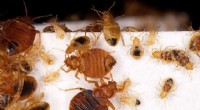
Imagine a population of beetles living in a forest with both light and dark bark trees. Let's say a mutation occurs in a beetle gene that causes some beetles to have darker coloration.
* Environment: The forest provides the selective pressure. Dark beetles will be better camouflaged on the dark bark and less likely to be eaten by birds.
* Genes: The gene mutation for darker coloration is the variation that gives the beetles an advantage.
* Evolution: Over time, the dark beetles are more likely to survive and reproduce, passing their genes on to their offspring. This will lead to an increase in the frequency of the dark coloration gene in the population, demonstrating evolution.
In conclusion, genes provide the variation necessary for evolution, and the environment acts as the selective force, guiding the direction of change. This interplay between genes and environment drives the ongoing process of evolution.