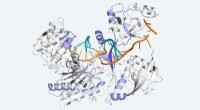
* Catalysts: Enzymes are biological catalysts, meaning they speed up chemical reactions without being consumed in the process. They do this by lowering the activation energy required for a reaction to occur.
* Specificity: Each enzyme is highly specific to a particular reaction or set of reactions. This specificity ensures that the right reactions happen at the right time and in the right place.
* Regulation: Enzyme activity can be regulated, allowing the cell to control the rate of various reactions. This regulation can be achieved through:
* Substrate concentration: More substrate means more enzyme activity.
* Product concentration: High product levels can sometimes inhibit enzyme activity.
* pH and temperature: Enzymes have optimal conditions for activity, and changes in pH or temperature can affect their efficiency.
* Activators and inhibitors: Specific molecules can either increase (activate) or decrease (inhibit) enzyme activity.
In summary, enzymes act as the body's tiny molecular machines, controlling the vast array of chemical reactions that occur within cells and maintain life.