Here's a breakdown of what the ecological niche of an organism denotes:
1. Habitat: This is the physical place where the organism lives. It includes factors like temperature, humidity, light, and soil type.
2. Food: The organism's diet, including the types of food it eats and how it obtains it.
3. Interactions: This encompasses all the relationships the organism has with other species, including:
* Predation: What the organism eats and what eats it.
* Competition: How it interacts with other species for resources like food, space, or mates.
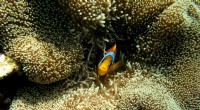
* Mutualism: How it benefits from relationships with other species.
* Commensalism: How it benefits from another species without harming or benefiting it.
* Parasitism: How it benefits from harming another species.
4. Role in the ecosystem: This refers to the organism's contribution to its environment. For example, a decomposer breaks down organic matter, a pollinator helps plants reproduce, and a predator controls prey populations.
5. Tolerance limits: This refers to the range of environmental conditions (like temperature, humidity, or salinity) that the organism can tolerate.
Key Points:
* No two species can occupy the same ecological niche: This is known as the competitive exclusion principle.
* Niche can be broad or narrow: Generalists have broad niches, while specialists have narrow ones.
* Niche can change over time: An organism's niche can evolve as environmental conditions change or as the organism develops new adaptations.
In summary, the ecological niche is a complex concept that describes an organism's unique role within its environment. Understanding an organism's niche is crucial for studying how ecosystems function and for conservation efforts.