Here's a breakdown:
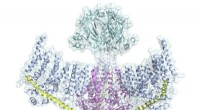
* Flagella: These are long, thin, helical filaments that extend from the bacterial cell.
* Filament: The main part of the flagellum, composed of a protein called flagellin.
* Hook: A curved structure that connects the filament to the basal body.
* Basal body: A complex structure embedded in the cell membrane and wall, responsible for rotating the filament.
The movement of flagella is powered by a proton motive force (PMF), which is a gradient of protons across the bacterial cell membrane. This gradient is generated by the electron transport chain during respiration.
Types of flagellar arrangements:
* Monotrichous: One flagellum at one end of the cell.
* Lophotrichous: A tuft of flagella at one end of the cell.
* Amphitrichous: A flagellum at each end of the cell.
* Peritrichous: Flagella distributed all over the cell surface.
Bacteria can also move by gliding motility which involves the secretion of slime and other molecules to propel them along surfaces, but flagella are the primary means of movement in most bacterial species.