* Increased Genetic Variation: The sheer number of offspring allows for a greater diversity of traits within a population. This variation is essential for a species to adapt to changing environments.
* Competition and Selection: Because more offspring are produced than resources can support, they must compete for survival. This competition leads to natural selection, where individuals with advantageous traits are more likely to survive and reproduce, passing on those traits to their offspring.
* Resilience to Environmental Change: A large population with high genetic diversity is more likely to include individuals with traits that make them better suited to survive unexpected environmental changes, like disease outbreaks or climate shifts.
It's important to understand that overproduction doesn't mean that each individual organism survives. In fact, the vast majority of offspring in many species will not survive to reproduce. This is the key to natural selection – the "winners" of the competition are the ones that pass on their traits.
Examples:
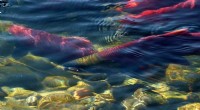
* Fish: A female fish may lay millions of eggs, but only a small percentage will survive to adulthood.
* Trees: A single tree can produce thousands of seeds, but only a few will find suitable conditions to grow and reproduce.
Overproduction, coupled with natural selection, is a powerful force in driving evolution. It allows species to adapt and thrive in a changing world.