Multiple Observations:
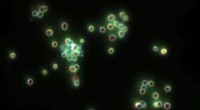
* Early Microscopists: Scientists like Robert Hooke, Antonie van Leeuwenhoek, and others used microscopes to observe various biological materials, including plant tissues and single-celled organisms. These observations revealed the existence of tiny, compartmentalized structures that they called "cells".
* Extensive Studies: Over time, many scientists observed different organisms, from plants to animals, and consistently found them to be composed of these basic units called cells. This extensive body of observations built a strong case for the universality of cells in living organisms.
Controlled Experiments:
* Cell Theory Development: Although not strictly controlled experiments in the modern sense, the development of the cell theory was based on observations and deductions. Scientists like Matthias Schleiden and Theodor Schwann studied various types of cells and proposed the principles of the cell theory:
* All living things are composed of cells.
* Cells are the basic unit of life.
* All cells arise from pre-existing cells.
* Later Studies: Subsequent research further solidified the cell theory through various experiments. For instance, experiments involving cell culture and the study of cell division provided evidence for the principle that all cells arise from pre-existing cells.
Key Point: While controlled experiments played a role in confirming and refining the cell theory, the generalization that all organisms are composed of cells primarily arose from the accumulation of multiple observations across various life forms.
It's important to remember that scientific discoveries often involve a complex interplay of observation, experimentation, and theoretical reasoning. The cell theory, like many other scientific generalizations, evolved through a process of continuous observation, refinement, and testing.