* Plants:
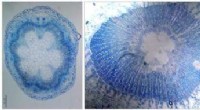
* Root wedging: Growing roots can exert tremendous pressure on rocks, splitting them apart.
* Chemical alteration: Plant acids (like oxalic acid) released by roots can dissolve minerals in rocks, weakening them.
* Animals:
* Burrowing: Animals like earthworms, moles, and rabbits dig tunnels and burrows, bringing fresh rock surfaces to the atmosphere and exposing them to weathering.
* Animal waste: Animal waste can be acidic and contribute to chemical weathering.
* Microorganisms:
* Lichens: These symbiotic organisms produce acids that can break down rock minerals.
* Bacteria: Certain bacteria can chemically break down rocks through oxidation or reduction processes.
* Fungi: Fungal hyphae can penetrate rock and release acids, leading to decomposition.
Overall, biological weathering involves the interaction of living organisms with rocks, leading to their physical breakdown (mechanical weathering) and/or chemical alteration (chemical weathering).