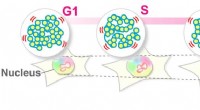
1. DNA Replication: Before dividing, the cell duplicates its entire genome, ensuring each daughter cell receives a complete set of genetic information.
2. Chromatin Condensation: The replicated DNA condenses into compact structures called chromosomes. This makes them easier to separate later.
3. Nuclear Envelope Breakdown: The membrane surrounding the nucleus breaks down, allowing the chromosomes to access the cytoplasm.
4. Spindle Formation: Microtubules, protein fibers, assemble into a structure called the spindle. This structure acts as a framework for separating the chromosomes.
5. Chromosome Alignment: The chromosomes align themselves at the center of the cell, along the spindle's equator.
6. Sister Chromatid Separation: The spindle fibers pull the duplicated chromosomes (sister chromatids) apart, moving them to opposite poles of the cell.
7. Cytokinesis: The cytoplasm divides, creating two separate daughter cells, each with its own nucleus containing a full set of chromosomes.
Why "Almost Identical"?
While mitosis aims for perfect replication, slight variations can occur due to:
* Mutations: Random changes in the DNA sequence can occur during replication, leading to minor differences between the daughter cells.
* Genetic Recombination: While rare in mitosis, some events can lead to exchange of genetic material between chromosomes, contributing to variability.
* Environmental Factors: Factors like cell stress or exposure to toxins can influence gene expression, leading to subtle differences in the daughter cells.
Overall, mitosis ensures that the daughter cells receive a near-identical copy of the parent cell's genetic information, contributing to the growth and development of organisms.