Here's why fixing and staining are important:
* Fixing: This process preserves the structure and morphology of microorganisms by killing them and attaching them to a slide. Without fixation, the delicate cells would be easily distorted or washed away during the staining process.
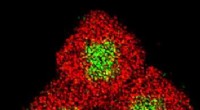
* Staining: This process uses dyes to enhance the contrast between the microorganisms and their surrounding environment. This allows for:
* Visualization: Microscopic organisms are often transparent and difficult to see without staining.
* Identification: Different stains bind to specific cellular components, revealing unique features that help identify different types of bacteria, fungi, and other microorganisms.
* Study of morphology: Stains highlight structures like the cell wall, capsule, flagella, and internal components, providing insights into their shape and arrangement.
* Diagnosis: Staining techniques are used in clinical settings to identify pathogens and determine the appropriate treatment.
In summary, fixing and staining are essential techniques in microbiology that allow researchers and medical professionals to:
* See microorganisms that are otherwise invisible.
* Identify different types of microorganisms.
* Understand the structure and morphology of microorganisms.
* Diagnose infections and guide treatment decisions.
Let me know if you have any other questions about specific staining techniques or their applications!