Remote Sensing:
* Satellite Imagery: Provides large-scale views of ocean surface temperature, chlorophyll concentration (indicating phytoplankton abundance), sea level, and other oceanographic variables.
* Aerial Photography: Captures images of marine ecosystems, including coral reefs, coastal habitats, and marine mammals.
* Acoustic Remote Sensing (Sonar): Used to map the ocean floor, detect fish schools, and track marine animals.
In-Situ Data Collection:
* Autonomous Underwater Vehicles (AUVs): Robots that collect data on ocean conditions, map the seafloor, and survey marine life.
* Remotely Operated Vehicles (ROVs): Controlled from a surface vessel, ROVs are used for visual inspection, sample collection, and manipulation tasks.
* Moored Buoys and Drifters: Collect data on ocean currents, water temperature, salinity, and other parameters over time.
* Oceanographic Sampling: Researchers use a variety of instruments to collect water samples, sediment cores, and biological specimens.
Molecular and Genetic Tools:
* DNA Barcoding: Helps identify species and understand biodiversity.
* Genomics: Studies the complete genetic makeup of marine organisms, providing insights into evolution, adaptation, and disease.
* Transcriptomics: Analyzes gene expression in marine organisms, revealing how they respond to environmental changes.
Data Analysis and Visualization:
* Geographic Information Systems (GIS): Visualize and analyze spatial data, helping to understand the distribution of marine species and habitats.
* Modeling and Simulation: Develop computer models to predict the impact of climate change, pollution, and other stressors on marine ecosystems.
Other Technologies:
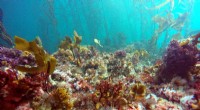
* Underwater Cameras and Video: Capture high-resolution images and videos of marine life and habitats.
* Acoustic Monitoring: Use sound recordings to study marine animals, including whales, dolphins, and fish.
* Biologging: Attaching sensors to animals to collect data on their movement, behavior, and physiology.
* Lab-Based Research: Utilizes advanced equipment like microscopes, spectrometers, and mass spectrometers for studying marine organisms in controlled environments.
Emerging Technologies:
* Artificial Intelligence (AI): Analyzing massive datasets from sensors and images to identify patterns and make predictions.
* Robotics: Developing more sophisticated underwater robots for exploration and data collection.
* Biotechnology: Utilizing genetic engineering to enhance the understanding and conservation of marine species.
Marine biology research is constantly evolving, with new technologies emerging and existing ones becoming more sophisticated. These technologies are crucial for understanding the oceans, their ecosystems, and the challenges facing marine life.