Here's why:
* Heterotrophic: This means they cannot produce their own food (like plants) and rely on consuming other organisms.
* Decomposer: This means they break down dead organic matter (like dead plants and animals) and release nutrients back into the environment.
Some specific examples of prokaryotes that fit this description include:
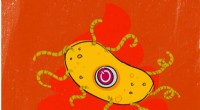
* Bacteria: Many bacteria are decomposers, playing a crucial role in breaking down organic waste and recycling nutrients. Examples include *E. coli*, *Bacillus subtilis*, and various types of soil bacteria.
* Archaea: While not as well-studied as bacteria, some archaea are also decomposers, often found in extreme environments like hot springs or salty lakes.
In short, any prokaryote that utilizes dead organic matter as its source of both energy and carbon is a heterotrophic decomposer.