Here are some characteristics of terrestrial organisms:
* Adapted to land: They have evolved physical and physiological adaptations to survive in terrestrial environments.
* Breathing air: Most terrestrial organisms breathe air using lungs or other specialized organs.
* Movement on land: They have developed methods of locomotion for navigating the ground, such as legs, wings, or slithering.
* Water regulation: They need to conserve water, as it is less readily available on land compared to aquatic environments.
* Temperature regulation: They need to maintain a stable internal body temperature in a changing environment.
Here are some examples of terrestrial organisms:
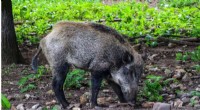
* Animals: mammals, birds, reptiles, amphibians, insects, spiders
* Plants: trees, flowers, grasses, ferns, mosses
* Fungi: mushrooms, molds
* Bacteria: many types, including those found in soil
There are many different types of terrestrial organisms, and they have evolved a wide range of adaptations to survive in diverse land environments.