Mitosis is a fundamental process in all living organisms, responsible for the growth, development, and repair of tissues. It's a form of cell division that produces two identical daughter cells from a single parent cell. Here's a breakdown of the process:
1. Interphase: This is the longest phase of the cell cycle, where the cell prepares for division. It's divided into three subphases:
* G1 phase: The cell grows and carries out normal metabolic functions. This is the stage where the cell makes the most proteins and organelles needed for division.
* S phase: The cell replicates its DNA, ensuring each daughter cell receives a complete set of chromosomes.
* G2 phase: The cell continues to grow and synthesize proteins needed for mitosis, including microtubules for the mitotic spindle.
2. Prophase: This marks the beginning of mitosis itself. Key events include:
* Chromatin condenses: The DNA condenses into visible chromosomes, each consisting of two identical sister chromatids attached at the centromere.
* Nuclear envelope breaks down: The membrane surrounding the nucleus disintegrates, allowing the chromosomes to access the cytoplasm.
* Mitotic spindle forms: Microtubules, composed of the protein tubulin, assemble from the centrosomes, forming the mitotic spindle.
3. Metaphase: The chromosomes align along the metaphase plate, an imaginary plane equidistant from the spindle poles. This ensures that each daughter cell receives an equal number of chromosomes. The spindle fibers attach to the centromeres of each chromosome, pulling them towards opposite poles.
4. Anaphase: The sister chromatids separate at the centromeres, pulled apart by the spindle fibers toward opposite poles of the cell. This results in each pole receiving a complete set of chromosomes.
5. Telophase: This is the final stage of mitosis. Here:
* Chromosomes decondense: The chromosomes unravel back into chromatin.
* Nuclear envelope reforms: Two new nuclear envelopes form around the separated sets of chromosomes, creating two distinct nuclei.
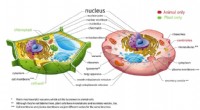
* Cytokinesis: The cytoplasm divides, forming two separate daughter cells. This occurs simultaneously with telophase in most organisms. In animal cells, a cleavage furrow forms, pinching the cell membrane inward. In plant cells, a cell plate forms, dividing the cell from the inside.
Outcome: The result of mitosis is two genetically identical daughter cells, each with the same number of chromosomes as the parent cell.
Importance: Mitosis is crucial for:
* Growth and development: It allows multicellular organisms to grow from a single cell to a complex organism.
* Repair and regeneration: It replaces damaged or worn-out cells, maintaining tissue integrity.
* Asexual reproduction: In some organisms, mitosis serves as the primary mode of reproduction, producing offspring genetically identical to the parent.
Note: Errors during mitosis can lead to mutations and potentially cancerous growth. However, the cell cycle is tightly regulated by various checkpoints that ensure proper chromosome segregation and prevent errors.