Here's why:
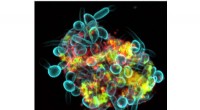
* Widely spaced cells: Connective tissues are characterized by having cells that are not tightly packed together like epithelial tissues. They are spread out within a matrix of extracellular material.
* Abundant extracellular material: This material, called the matrix, is what makes up the bulk of connective tissue. It is composed of fibers (collagen, elastin, reticular) and ground substance, which is a fluid or gel-like material.
Examples of connective tissue:
* Bone: Rigid connective tissue with a hard matrix containing calcium salts.
* Cartilage: Supportive connective tissue with a firm, rubbery matrix.
* Blood: Fluid connective tissue with a liquid matrix called plasma.
* Adipose tissue: Connective tissue with cells specialized for fat storage.
* Loose connective tissue: Provides support and flexibility.
The extracellular matrix of connective tissue plays a vital role in its function, providing:
* Support and structure: Connective tissues provide structural support for other tissues and organs.
* Protection: They protect organs from injury and infection.
* Binding: Connective tissues bind different tissues together, forming organs and organ systems.
* Transportation: Blood, a type of connective tissue, carries nutrients and oxygen throughout the body.
* Energy storage: Adipose tissue stores energy in the form of fat.