* Robert Hooke (1665): Hooke was the first to observe and name cells. He examined thin slices of cork under a microscope and noticed small, box-like compartments, which he called "cells" because they reminded him of the small rooms in a monastery. However, he did not realize that these cells were the fundamental units of life.
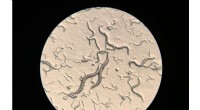
* Anton van Leeuwenhoek (1674): Leeuwenhoek, a Dutch scientist, improved the microscope and was the first to observe living cells, including bacteria and protozoa.
* Matthias Schleiden (1838): Schleiden, a German botanist, concluded that all plants are made up of cells.
* Theodor Schwann (1839): Schwann, a German zoologist, extended Schleiden's observations to animals, concluding that all animals are also composed of cells.
* Rudolf Virchow (1855): Virchow, a German pathologist, contributed the crucial principle that all cells arise from pre-existing cells, solidifying the cell theory.
While Robert Hooke's initial observation was crucial, the cell theory as we know it today is a result of the combined efforts of these scientists. It is considered one of the most important unifying concepts in biology.