Here's how it works:
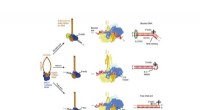
1. Formation of the phragmoplast: During late telophase of mitosis, microtubules and associated proteins form a structure called the phragmoplast between the two daughter nuclei.
2. Vesicle transport: Golgi-derived vesicles containing cell wall material (cellulose, pectin, etc.) move along the microtubules of the phragmoplast and congregate at the center of the cell.
3. Cell plate formation: These vesicles fuse with each other, forming a new cell wall called the cell plate. The cell plate grows outward, eventually reaching the existing cell walls, effectively dividing the cytoplasm into two daughter cells.
This process differs from animal cytokinesis, where a cleavage furrow forms and pinches the cell in two.