* Nucleus: A membrane-bound organelle containing the cell's genetic material (DNA) in the form of chromosomes. Prokaryotes have a single, circular DNA molecule located in a region called the nucleoid, but it's not enclosed within a membrane.
* Membrane-bound organelles: Eukaryotic cells have a variety of membrane-bound organelles, including:
* Endoplasmic reticulum (ER): A network of interconnected membranes involved in protein synthesis, lipid synthesis, and detoxification.
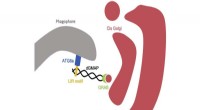
* Golgi apparatus: A stack of flattened sacs involved in processing, sorting, and packaging proteins and lipids.
* Mitochondria: The powerhouses of the cell, responsible for cellular respiration and ATP production.
* Lysosomes: Contain enzymes for breaking down waste materials and cellular debris.
* Peroxisomes: Involved in lipid metabolism and detoxification.
* Cytoskeleton: A network of protein filaments (microtubules, microfilaments, and intermediate filaments) that provides structural support, facilitates cell movement, and aids in organelle transport. While prokaryotes have some structural proteins, they don't have the complex cytoskeleton found in eukaryotes.
* Larger size: Eukaryotic cells are generally much larger than prokaryotic cells.
* Linear DNA: Eukaryotes have their DNA organized into linear chromosomes, whereas prokaryotes have a single, circular chromosome.
In summary: Eukaryotic animal cells have a much more complex internal organization than prokaryotic bacteria. They have membrane-bound organelles, a cytoskeleton, and a more complex genetic organization. These features allow for greater specialization and complexity in eukaryotic cells.