Here's why:
* Natural selection is the process by which organisms with traits better suited to their environment survive and reproduce more successfully, passing those traits on to their offspring. This constant cycle of variation, inheritance, and selection leads to changes in populations over time.
* All life on Earth shares a common ancestor. This means that every single organism, regardless of how complex or simple, has been shaped by the same evolutionary process.
Therefore, it's not about which organisms likely evolved by natural selection, but rather how natural selection shaped them into the diverse array of life we see today.
Here are some examples of how natural selection has acted on specific organisms:
* The peppered moth: During the Industrial Revolution, the light-colored peppered moth became less common because their camouflage was less effective on soot-darkened trees. The darker moths, which were previously rare, became more common due to their better camouflage.
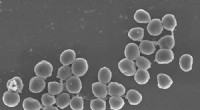
* Antibiotic resistance in bacteria: When antibiotics are used, some bacteria that are resistant to the antibiotic survive and reproduce, passing on their resistance. Over time, this leads to the emergence of antibiotic-resistant bacteria.
* The long neck of the giraffe: Giraffes with slightly longer necks had a better chance of reaching leaves high in trees and surviving. This advantage was passed on to their offspring, eventually leading to the long necks we see today.
In summary, all organisms have evolved by natural selection, and it continues to shape life on Earth in subtle and sometimes dramatic ways.