Here's a breakdown:
Key Concepts:
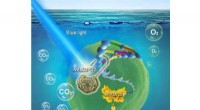
* Producers: These are organisms, mostly plants, that make their own food through photosynthesis. They form the base of the food chain.
* Consumers: These are organisms that get their energy by eating other organisms. There are different levels of consumers:
* Primary Consumers: Herbivores that eat producers.
* Secondary Consumers: Carnivores that eat herbivores.
* Tertiary Consumers: Carnivores that eat other carnivores.
* Decomposers: These organisms (like bacteria and fungi) break down dead organisms and waste, returning nutrients to the soil.
Example:
A simple food chain might look like this:
1. Sun: Provides energy for photosynthesis.
2. Grass (Producer): Converts sunlight into energy.
3. Grasshopper (Primary Consumer): Eats grass.
4. Frog (Secondary Consumer): Eats grasshoppers.
5. Snake (Tertiary Consumer): Eats frogs.
6. Decomposers: Break down dead organisms from all levels.
Importance of Food Chains:
* Energy Flow: Food chains show how energy flows from the sun through producers and consumers.
* Nutrient Cycling: They demonstrate the movement of nutrients from one organism to another and back to the environment.
* Ecosystem Stability: Food chains illustrate the interconnectedness of organisms in an ecosystem. If one part of the chain is disrupted, it can have ripple effects on other organisms.
Food Webs:
Real ecosystems are more complex than simple food chains. Food webs are interconnected food chains that show the complex relationships between organisms and the flow of energy and nutrients in an ecosystem.
Remember: Food chains are simplified representations of the complex relationships within an ecosystem. They are important for understanding the flow of energy and nutrients and the delicate balance within an ecosystem.