* Cellular Specialization: Cells in multi-celled organisms (multicellular organisms) specialize to perform specific functions. Two or three cells wouldn't be enough to handle the diverse tasks required for survival.
* Evolutionary Advantage: The advantage of multicellularity is that it allows for greater complexity and adaptability. Larger, more complex organisms with many cells have a better chance of surviving and reproducing.
However, here are some interesting points to consider:
* Early Life: Some scientists theorize that the first forms of life were single-celled organisms that eventually formed colonies. These colonies might have temporarily consisted of two or three cells.
* Dictyostelium discoideum: This fascinating amoeba can exist as single-celled organisms, but when food becomes scarce, they aggregate into a multicellular slug (which is technically a colony of amoebas). While not technically a two or three-celled organism, it demonstrates the potential for single-celled organisms to form temporary, multi-celled structures.
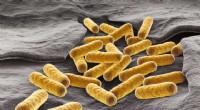
* Biofilms: Biofilms are communities of microorganisms that are attached to a surface. They can consist of hundreds or even thousands of cells, but they aren't considered true multicellular organisms.
In conclusion, while there are no known organisms that are permanently composed of just two or three cells, the idea of early lifeforms and the examples of Dictyostelium and biofilms show how cells can collaborate and form complex structures, even if those structures are not true multicellular organisms.