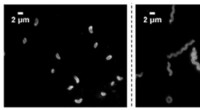
Bacteria reproduce asexually through a process called binary fission. Here's how it works:
1. DNA Replication: The single, circular DNA molecule in the bacterium replicates, producing two identical copies.
2. Cell Growth: The bacterium increases in size, elongating and growing.
3. Segregation: The two replicated DNA molecules move to opposite ends of the elongated cell.
4. Cell Division: The cell membrane and cell wall begin to constrict in the middle of the cell, forming a septum. This septum eventually divides the cell into two identical daughter cells, each containing a complete copy of the original DNA.
5. Daughter Cells: The two daughter cells separate, each becoming an independent bacterium.
Key Features of Binary Fission:
* Speed: Binary fission is a very rapid process, allowing bacteria to multiply quickly under favorable conditions.
* Genetic Identity: Daughter cells are genetically identical to the parent cell, except for occasional mutations.
* Adaptability: While binary fission ensures genetic stability, mutations can occur during DNA replication, contributing to bacterial evolution and adaptation.
Additional Points:
* Generation Time: The time it takes for a bacterial population to double is called the generation time. This varies depending on the bacterial species and environmental conditions.
* Environmental Factors: Factors like temperature, nutrient availability, pH, and oxygen levels can influence the rate of bacterial reproduction.
* Variations: While binary fission is the primary mode of reproduction, some bacteria can also engage in horizontal gene transfer, allowing them to exchange genetic information with other bacteria.
In Summary:
Binary fission is a simple and efficient process that allows bacteria to reproduce rapidly and create large populations. This ability, combined with their adaptability, makes bacteria incredibly successful organisms.