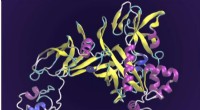
1. Complexity: Proteins are complex molecules with intricate three-dimensional structures that require a specific sequence of amino acids. This complexity makes it unlikely that proteins would have spontaneously arisen from a primordial soup.
2. Instability: Proteins are relatively unstable molecules, especially in harsh environments. They are susceptible to degradation by heat, pH changes, and enzymatic activity.
3. Catalytic Activity: While proteins are excellent catalysts, their catalytic activity requires a specific three-dimensional structure, which, as mentioned above, is difficult to achieve spontaneously.
4. Information Storage: Proteins do not have the ability to store genetic information. This information is encoded in nucleic acids (DNA and RNA).
5. Self-Replication: Proteins cannot replicate themselves. They are synthesized from instructions encoded in DNA.
In contrast, RNA is considered a more likely candidate for the first living molecule due to its:
* Simpler structure: RNA is structurally simpler than proteins and has a single-stranded structure, making it easier to form spontaneously.
* Stability: RNA is more stable than proteins in harsh environments.
* Catalytic activity: RNA can act as both a genetic material and a catalyst (ribozymes).
* Information storage: RNA stores genetic information.
* Self-replication: RNA can self-replicate through a process called autocatalysis.
The "RNA world hypothesis" proposes that RNA was the primary form of life on early Earth, performing both genetic and catalytic functions. Later, DNA and proteins evolved from RNA, becoming the dominant molecules in modern life.
Therefore, while proteins are essential for life, their complexity and instability make them less likely candidates for the first living molecule compared to RNA.