1. Adaptations:
* Physical adaptations: These are physical traits that help an organism survive in its environment. Examples include:
* Camouflage: Allows an organism to blend in with its surroundings, making it harder for predators to find it.
* Mimicry: Allows an organism to resemble another organism, often a dangerous one, deterring predators.
* Stronger limbs or claws: Help organisms defend themselves or hunt more effectively.
* Thick fur or feathers: Provide insulation for cold environments.
* Efficient respiratory systems: Adapt to survive in environments with low oxygen.
* Behavioral adaptations: These are actions or patterns of behavior that help an organism survive. Examples include:
* Migration: Moving to different locations based on seasonal changes or food availability.
* Hibernation: Reducing activity and metabolism to conserve energy during harsh conditions.
* Social behavior: Living in groups for protection, hunting, or raising young.
* Learning: Being able to learn and adapt to changing conditions.
2. Environmental factors:
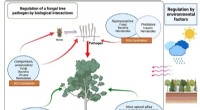
* Competition: Organisms compete for resources like food, water, shelter, and mates. Those better adapted to compete are more likely to survive.
* Predation: Being preyed upon by other organisms puts pressure on survival. Those better equipped to avoid or defend against predators are more likely to survive.
* Disease: Organisms with stronger immune systems are more resistant to disease.
* Habitat: Organisms that are well-suited to their habitat are more likely to thrive.
* Climate Change: Organisms that are able to adapt to changing environmental conditions are more likely to survive.
3. Genetics and Evolution:
* Genetic variation: Individuals within a species have different traits due to genetic differences. Some traits may be more advantageous for survival in a particular environment.
* Natural selection: Over time, individuals with advantageous traits are more likely to reproduce and pass on those traits to their offspring. This leads to gradual changes in the population, with the most advantageous traits becoming more common.
4. Luck:
* Sometimes, survival comes down to pure chance. For example, an individual might be in the right place at the right time to avoid a predator or find a food source.
It's important to understand that these factors often interact. For example, an organism might have strong physical adaptations but still struggle to survive if its habitat is destroyed.
In summary: The survival of an organism depends on a complex interplay of adaptations, environmental factors, genetics, and even a bit of luck. The organisms that are most likely to survive are those that are best suited to their environment and have the traits that allow them to overcome challenges.