* Inner mitochondrial membrane: This membrane is impermeable to most molecules, including protons (H+). This creates a proton gradient across the membrane.
* Electron transport chain: Located within the inner mitochondrial membrane, this chain of protein complexes uses the energy from electrons to pump protons from the mitochondrial matrix into the intermembrane space.
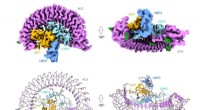
* ATP synthase: This protein complex is embedded in the inner mitochondrial membrane. It acts like a molecular turbine, using the energy of the proton gradient to drive the synthesis of ATP from ADP and inorganic phosphate (Pi).
Here's a breakdown of how it all works:
1. Electron transport chain: Electrons are passed from molecule to molecule down the electron transport chain. This movement releases energy, which is used to pump protons (H+) across the inner mitochondrial membrane into the intermembrane space.
2. Proton gradient: The pumping of protons creates a concentration gradient and an electrochemical gradient across the inner membrane. The intermembrane space becomes more acidic (higher proton concentration) and has a higher electrical potential than the matrix.
3. ATP synthase: This gradient represents potential energy. ATP synthase uses this potential energy to drive the synthesis of ATP. Protons flow back into the matrix through ATP synthase, providing the energy to add a phosphate group to ADP, creating ATP.
In summary: The inner mitochondrial membrane, the electron transport chain, and ATP synthase all play crucial roles in chemiosmosis, the process by which ATP is synthesized in mitochondria.