Here are some examples of asexual reproduction:
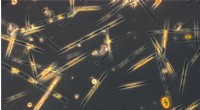
* Binary fission: A single-celled organism divides into two identical daughter cells. (e.g., bacteria)
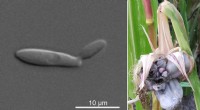
* Budding: A new organism develops as an outgrowth or bud from the parent organism. (e.g., yeast, hydra)
* Spore formation: Specialized cells called spores are released from the parent organism, each capable of developing into a new individual. (e.g., fungi, ferns)
* Vegetative propagation: New plants arise from specialized structures like bulbs, tubers, or runners. (e.g., onions, potatoes, strawberries)
In contrast, sexual reproduction requires two parents, each contributing genetic material to the offspring. This results in greater genetic diversity.