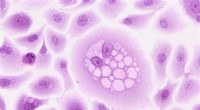
Imagine a small, roundish, jelly-like blob. That's the basic shape of a typical animal cell. It's enclosed by a cell membrane, a thin, flexible layer that acts like a gatekeeper, controlling what goes in and out of the cell.
Within the cell, you'll find:
* Cytoplasm: This is a thick, gel-like substance that fills the cell and contains all the other parts.
* Nucleus: Think of this as the control center. It's a large, round structure containing the cell's DNA, the blueprint for all the cell's activities.
* Mitochondria: These are like tiny powerhouses, converting food into energy for the cell to function.
* Ribosomes: These are small structures responsible for making proteins, the building blocks of the cell.
* Endoplasmic Reticulum (ER): A network of interconnected membranes that helps make and transport molecules.
* Golgi Apparatus: This acts like a packaging and shipping center, modifying and sending out proteins and other molecules.
* Lysosomes: These are like the cell's recycling center, breaking down waste products.
Other structures you might find:
* Vacuoles: Storage containers for water and other materials. (Animal cells usually have small vacuoles, while plant cells have large central vacuoles.)
* Centrioles: These are involved in cell division.
It's important to note:
* Animal cells lack a cell wall, which gives plant cells their rigid structure.
* Animal cells are highly varied, with different types of cells having different shapes and structures based on their functions.
To get a more visual understanding:
* Search online for "animal cell diagram" to see a detailed illustration.
* Explore 3D models of animal cells available on educational websites.
Understanding the structure of an animal cell is crucial to understanding how these tiny building blocks work together to create the complex organisms we see around us.