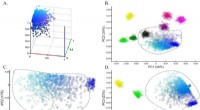
Protein conformation refers to the three-dimensional shape a protein adopts. This shape is crucial for its function and is determined by a complex interplay of several factors:
1. Amino Acid Sequence:
- The primary structure, or the linear sequence of amino acids, is the fundamental determinant of protein conformation.
- Each amino acid has unique chemical properties (hydrophobic, hydrophilic, charged, etc.) that influence how it interacts with other amino acids and the surrounding environment.
- This sequence dictates the formation of secondary and tertiary structures.
2. Interactions between Amino Acids:
- Hydrogen bonds: These form between polar groups of amino acids, stabilizing specific conformations.
- Ionic interactions: These occur between oppositely charged amino acid side chains, contributing to structure and stability.
- Hydrophobic interactions: Non-polar amino acids tend to cluster together, excluding water and promoting specific folding patterns.
- Van der Waals forces: Weak but important attractions between atoms, contributing to overall stability.
- Disulfide bonds: Covalent bonds between cysteine residues, forming strong links and stabilizing tertiary structure.
3. Environmental Factors:
- Temperature: High temperatures can disrupt weak interactions, leading to protein unfolding (denaturation).
- pH: Changes in pH can alter the ionization state of amino acids, affecting interactions and potentially disrupting conformation.
- Solvent: The presence of specific solvents can influence interactions between amino acids and the overall folding process.
4. Chaperone Proteins:
- These proteins assist in the correct folding of other proteins, preventing aggregation and misfolding. They can bind to unfolded proteins, guiding them towards their correct conformation.
The 3D structure of a protein is crucial for its function because:
* Specificity: The shape of a protein determines its ability to interact with other molecules, such as substrates, enzymes, or receptors. This interaction is highly specific, enabling the protein to perform its specific function.
* Activity: The conformation dictates the protein's catalytic activity (for enzymes) or its ability to bind to and transport molecules.
* Stability: The correct folding ensures the protein is stable and functional in the cellular environment. Misfolded proteins can be inactive or even harmful, leading to diseases like Alzheimer's and Parkinson's.
* Cellular Processes: Protein conformation is fundamental to all cellular processes, from metabolism and signaling to DNA replication and cell division.
In summary, the unique and complex structure of each protein is not random but a result of a carefully orchestrated process driven by its amino acid sequence and environmental factors. This precise conformation ensures the protein's ability to perform its specific function within the intricate machinery of the cell.