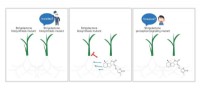
* Early Humans: They needed to identify edible plants and animals, distinguish between safe and dangerous creatures, and understand how to use natural resources.
* Ancient Civilizations: Farmers relied on understanding plant and animal variations for successful agriculture. Medicine practitioners used plant classifications for healing.
* Early Naturalists: These scholars observed and documented the natural world, focusing on identifying, naming, and organizing organisms.
The earliest classifications were based on observable characteristics like:
* Appearance: Size, shape, color, and other physical traits.
* Habitat: Where they lived (land, water, etc.).
* Behavior: How they moved, ate, or interacted with their environment.
However, it's important to remember that:
* Classification wasn't initially about a deep understanding of evolutionary relationships. That came later with the development of modern taxonomy.
* Early classifications were often arbitrary and inconsistent. Different cultures had different systems, and there was no universally agreed-upon method.
The shift towards a more scientific classification system occurred later, driven by:
* Aristotle's work: He proposed a hierarchical system for grouping animals based on their shared characteristics.
* Linnaeus's work: He introduced binomial nomenclature, a standardized naming system, and a more comprehensive classification scheme.
The modern goal of classification is to:
* Understand evolutionary relationships: To trace the history of life on Earth.
* Communicate effectively: To ensure scientists worldwide are using the same names and categories for organisms.
* Manage biodiversity: To protect and conserve species and ecosystems.
So, while the original purpose of classification was practical, its importance and complexity have grown immensely over time, allowing us to better understand and manage the incredible diversity of life on Earth.