Biological Science
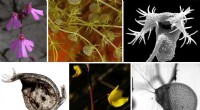
* Focus: Studies living organisms, their structure, function, growth, origin, evolution, and distribution. This includes everything from microscopic bacteria to giant whales.
* Subject Matter: Living things, including plants, animals, fungi, bacteria, viruses, and all their components (cells, organs, systems, etc.).
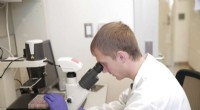
* Methods: Experiments, observations, data analysis, often relying on microscopes and other tools to study small structures.
* Key Areas:
* Botany: Study of plants
* Zoology: Study of animals
* Microbiology: Study of microscopic organisms
* Ecology: Study of how organisms interact with each other and their environment
* Genetics: Study of heredity and genes
* Evolution: Study of how life has changed over time
Physical Science
* Focus: Studies non-living matter and the fundamental laws governing the universe. It explores the nature of energy, matter, and their interactions.
* Subject Matter: Matter, energy, forces, motion, light, sound, electricity, magnetism, heat, and the structure of the universe.
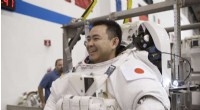
* Methods: Experiments, observations, measurements, calculations, and often using sophisticated instruments like telescopes, spectrometers, and particle accelerators.
* Key Areas:
* Physics: Study of matter, energy, and their interactions
* Chemistry: Study of matter and its properties
* Astronomy: Study of celestial objects and the universe
* Geology: Study of the Earth's structure and history
Key Differences:
* Subject Matter: Biological science studies living organisms, while physical science studies non-living matter and the laws governing the universe.
* Complexity: Biological systems are incredibly complex, with numerous interactions and feedback loops. Physical systems, while not simple, are often governed by more straightforward laws.
* Experimental Approach: Biological experiments are often more challenging due to the complexity of living organisms and their variability. Physical experiments can be more controlled and repeatable.
Overlap and Interdependence:
Although distinct, biological and physical science are interconnected:
* Chemistry is essential for understanding biological processes: The chemical reactions that drive life are governed by the principles of chemistry.
* Physics provides the framework for understanding biological processes: Laws of motion, energy, and thermodynamics apply to living organisms.
* Biological systems are governed by physical laws: For example, the flow of blood in the circulatory system follows principles of fluid dynamics.
In summary, biological science investigates the intricate world of living organisms, while physical science explores the fundamental laws and processes that govern the universe. They are complementary fields, each contributing to our understanding of the vast and interconnected natural world.