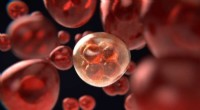
* Surface Area to Volume Ratio: As a cell grows larger, its volume increases much faster than its surface area. This means that the cell's surface area, responsible for nutrient uptake and waste removal, becomes increasingly inadequate to support the growing volume. A giant single-celled organism like the blob would struggle to acquire enough nutrients and expel waste.
* Diffusion Limits: Cells rely on diffusion to transport molecules within their cytoplasm. Diffusion works well over short distances but becomes extremely inefficient over long distances. A massive single-celled organism would face significant challenges in moving nutrients and waste products across its enormous interior.
* Cellular Structure: Single-celled organisms lack the complex internal structures and organ systems found in multicellular organisms. These structures are crucial for maintaining homeostasis and carrying out essential functions like respiration, digestion, and excretion. A single cell wouldn't be able to perform all these tasks efficiently on a large scale.
* Predation: A giant single-celled organism would be a prime target for predators, both microscopic and larger. It wouldn't have the ability to defend itself or escape like a multicellular organism.
While the concept of a gigantic single-celled organism is intriguing, it's simply not feasible based on our current understanding of biology and cell function.
However, there are some interesting real-life examples of large single-celled organisms:
* Xenophyophores: These are massive, single-celled amoebas that can reach several centimeters in diameter. They live in deep sea environments and are thought to be among the largest single-celled organisms known.
* Caulerpa taxifolia: This alga can grow to several meters in length and is considered a single-celled organism, although its structure is more complex than a typical single-celled organism.
While these examples are fascinating, they still pale in comparison to the fictional blob and highlight the limitations of size for single-celled life.