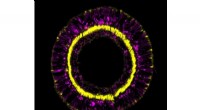
Here's a breakdown of its key features and functions:
Structure:
* Phospholipid bilayer: The cell membrane is primarily composed of a double layer of phospholipids, with their hydrophilic (water-loving) heads facing outwards and their hydrophobic (water-fearing) tails facing inwards. This arrangement creates a barrier that prevents most water-soluble substances from passing through.
* Proteins: Embedded within the phospholipid bilayer are various proteins that serve diverse functions, including:
* Transport proteins: Facilitate the movement of specific molecules across the membrane.
* Receptor proteins: Bind to signaling molecules and trigger cellular responses.
* Adhesion proteins: Help cells adhere to each other and to the extracellular matrix.
* Enzymes: Catalyze chemical reactions within the membrane or on its surface.
* Cholesterol: This lipid helps to maintain the fluidity and stability of the membrane.
Functions:
* Regulation of transport: The cell membrane controls the passage of substances into and out of the cell, ensuring the appropriate balance of ions, nutrients, and waste products.
* Cell signaling: Receptor proteins on the membrane receive signals from the environment and trigger specific cellular responses.
* Cell adhesion: Adhesion proteins allow cells to connect with each other and with the extracellular matrix, forming tissues and organs.
* Cellular recognition: Certain proteins on the membrane act as markers that help cells identify each other and interact appropriately.
* Protection: The cell membrane provides a barrier against harmful substances and pathogens.
In summary, the cell membrane is a dynamic and essential structure that regulates the cell's interaction with its environment, enabling it to carry out its vital functions.