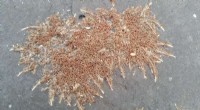
* To get a broader view of the organism's overall shape and size: Lower powers provide a wider field of view, allowing the scientist to see the organism's general morphology and how it interacts with its environment. This is useful for identifying the organism and understanding its basic structure.
* To observe movement and behavior: Lower powers allow for observing the organism's movements and how it interacts with its surroundings. This is particularly helpful for studying motile organisms like protozoa or algae.
* To study the organism's interactions with its environment: Lower powers enable the scientist to observe the organism's interactions with other organisms or its surroundings, such as how it moves through water or how it interacts with other cells.
* To observe larger structures: Lower powers are better suited for observing larger structures within the cell, like the nucleus or vacuoles, which may be too large to be seen clearly at higher magnifications.
* To avoid damaging the organism: Higher powers require stronger light, which can damage delicate cells. Lower powers use less intense light, making it safer for the organism.
* To improve contrast: Lower powers can sometimes provide better contrast, making the organism easier to see against the background.
In summary, while higher powers offer more detail, lower powers can provide a more comprehensive understanding of the organism's overall structure, behavior, and interaction with its environment. The choice of magnification depends on the specific research question and the desired information.