Here's why:
* Cells are too small to be seen with the naked eye. The average cell is only a few micrometers in size, which is far smaller than the smallest thing we can see without assistance.
* Microscopes magnify objects. Microscopes use lenses to magnify small objects, allowing us to see details that would otherwise be invisible.
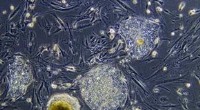
* Different types of microscopes exist. There are different types of microscopes, each with its own strengths and weaknesses, that are used to view cells. For example:
* Light microscopes use visible light to illuminate and magnify samples.
* Electron microscopes use beams of electrons to create images, allowing for much higher magnification and detail.
Scientists use microscopes to study a wide range of cellular processes, including:
* Structure: Observing the shape and arrangement of cell organelles.
* Function: Studying how cells carry out their various functions.
* Growth and development: Understanding how cells divide and differentiate.
* Disease: Identifying and studying the causes of diseases at the cellular level.
So, yes, microscopes are absolutely essential for scientists who study cells.