Here's why:
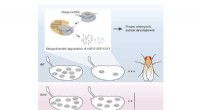
* Mitochondrial DNA (mtDNA): Mitochondria have their own circular DNA molecule, separate from the nuclear DNA found in the cell's nucleus. This DNA encodes for some of the proteins needed for mitochondrial function.
* Mitochondrial Ribosomes: Mitochondria also possess their own ribosomes, which are smaller than the ribosomes found in the cytoplasm. These ribosomes are responsible for translating the mtDNA into proteins.
This unique feature of mitochondria is a result of their endosymbiotic origin. It is believed that mitochondria were once free-living bacteria that were engulfed by early eukaryotic cells, eventually becoming an integral part of the cell's structure.