Here are some key aspects of biogeography:
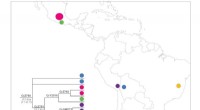
* Spatial Patterns: Biogeographers examine how species are distributed across continents, oceans, and even smaller geographic areas like islands or mountain ranges.
* Historical Factors: They consider how events like continental drift, climate change, and past migrations have shaped the current distribution of life.
* Ecological Interactions: They study how species interact with their environment (like temperature, rainfall, and food availability) and with other species (like predators and competitors).
* Evolutionary Processes: Biogeographers explore how evolution and adaptation have played a role in shaping the distribution of life.
What do biogeographers do?
* Research: They conduct field research, analyze data, and develop models to understand the factors driving the distribution of organisms.
* Conservation: They use their knowledge to inform conservation efforts, helping to protect endangered species and habitats.
* Management: They provide insights for managing natural resources, such as forests and fisheries.
* Education: They teach others about biogeography and its importance in understanding the natural world.
In essence, biogeographers are bridge builders, connecting the fields of biology, geography, ecology, and evolution to better understand the diversity and distribution of life on our planet.