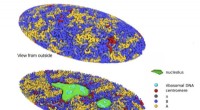
This is true for all eukaryotic organisms, which include animals, plants, fungi, and protists. The nucleus acts as a control center for the cell, housing the genetic material (DNA) that makes up the chromosomes.
There is one notable exception to this rule: prokaryotes (bacteria and archaea). Prokaryotes do not have a nucleus; their DNA is located in a region called the nucleoid, which is not enclosed by a membrane.