Active Transport:
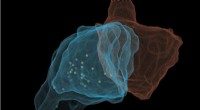
* Vesicular Transport: This involves the use of membrane-bound sacs called vesicles to move large molecules, particles, or even entire organelles across the membrane. This process requires energy and can be further categorized into:
* Exocytosis: Vesicles fuse with the plasma membrane and release their contents outside the cell.
* Endocytosis: The plasma membrane invaginates, forming a vesicle that encloses material from the outside and brings it into the cell. Endocytosis can be further subdivided into:
* Phagocytosis: The cell engulfs large particles like bacteria or cellular debris.
* Pinocytosis: The cell takes in fluids and dissolved substances.
* Receptor-mediated endocytosis: Specific molecules bind to receptors on the cell surface, triggering the formation of a vesicle that internalizes the bound molecules.
Passive Transport:
While passive transport usually deals with smaller molecules, certain mechanisms can facilitate the movement of larger substances:
* Facilitated Diffusion: Large molecules can move across the membrane with the help of membrane proteins (e.g., channel proteins, carrier proteins). This process is still passive, meaning it doesn't require energy, but it facilitates the movement of large molecules that wouldn't otherwise be able to cross the membrane.
Important Note:
* The size and type of molecule greatly influence how it crosses the cell membrane.
* For large molecules, active transport via vesicles is the most common method.
* Facilitated diffusion can help larger molecules pass through the membrane but still relies on concentration gradients and doesn't directly involve energy expenditure.