1. Robert Hooke (1635-1703): Hooke is credited with coining the term "cell" in 1665. He observed thin slices of cork under a microscope and noticed small compartments that reminded him of the cells in a monastery. His work was crucial in establishing the fundamental building blocks of living organisms.
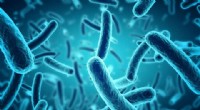
2. Anton van Leeuwenhoek (1632-1723): Leeuwenhoek was a Dutch scientist who developed powerful microscopes that allowed him to observe living organisms in detail. He discovered bacteria, protozoa, and even red blood cells in the 1670s, expanding our understanding of the diversity of microscopic life.
3. Matthias Schleiden (1804-1881): Schleiden was a German botanist who studied plant cells. He proposed that all plants are composed of cells in 1838. This was a significant step towards the cell theory.
4. Theodor Schwann (1810-1882): Schwann, a German physiologist, built on Schleiden's work by showing that animals are also composed of cells in 1839. This extended the cell theory to encompass all living organisms.
5. Rudolf Virchow (1821-1902): Virchow, a German physician, is known for his famous saying "omnis cellula e cellula" (all cells arise from pre-existing cells). He established that cells are not spontaneously generated but rather originate from other cells, further solidifying the cell theory.
These five scientists played pivotal roles in the discovery and understanding of cells, laying the foundation for modern cell biology.