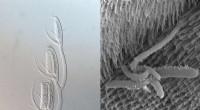
* Protists: A diverse group of mostly single-celled organisms, but some are multicellular. They are not plants, animals, or fungi. They are often considered the "catch-all" group for eukaryotic organisms that don't fit into the other three kingdoms.
* Eukaryotes: Organisms whose cells have a nucleus and other membrane-bound organelles. This means their DNA is contained within a membrane-enclosed nucleus, unlike prokaryotes which have their DNA free-floating in the cytoplasm.
Key Differences between Prokaryotes and Eukaryotes:
| Feature | Prokaryotes | Eukaryotes |
|---|---|---|
| Nucleus | Absent | Present |
| Membrane-bound organelles | Absent | Present |
| Cell size | Generally smaller | Generally larger |
| DNA structure | Circular, single-stranded | Linear, multi-stranded |
| Examples | Bacteria, Archaea | Plants, animals, fungi, protists |
So, saying "protists are eukaryotes" means that protists belong to the same group of organisms as plants, animals, and fungi, sharing the characteristic of having a true nucleus in their cells.