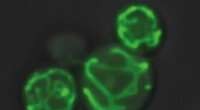
1. Cytoskeleton: This network of protein filaments within the cell provides structure and support, helping maintain the cell's shape. Different arrangements of cytoskeletal components can lead to different cell shapes.
2. Cell membrane: The flexible outer layer of the cell allows for some degree of deformation, but also provides structural support.
3. Internal pressure: The pressure exerted by the cell's contents can also influence its shape.
4. External factors: Surrounding cells, tissues, and other environmental conditions can influence a cell's shape.
5. Cell function: Some cells have specialized shapes that are tailored to their function. For example, nerve cells are long and thin, while muscle cells are elongated and cylindrical.
Therefore, it is not one specific factor but a combination of these factors that contributes to the shape of an animal cell. The "roundness" is often a result of the flexible cell membrane and the internal pressure, but it's not a universal characteristic.