Kingdoms:
* Protista: Single-celled organisms like amoebas, algae, and paramecia.
* Fungi: Multicellular organisms like mushrooms, yeasts, and molds.
* Plantae: Multicellular organisms like trees, flowers, and ferns.
* Animalia: Multicellular organisms like humans, insects, and fish.
Other:
* Some algae: Though algae are often classified as Protista, some types have evolved to be multicellular.
Key Features of Eukaryotic Cells:
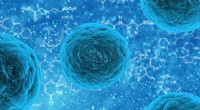
* Membrane-bound nucleus: Contains the cell's genetic material (DNA).
* Organelles: Specialized structures within the cell, like mitochondria, Golgi apparatus, and endoplasmic reticulum.
* Larger and more complex: Compared to prokaryotic cells.
In contrast, bacteria and archaea are prokaryotes and have simpler cells without a nucleus or other membrane-bound organelles.